The newly built Clean Assembly Hall (H9/H10) is a strategic investment that significantly expands Expom’s capabilities in the assembly, outfitting and testing of advanced crane structures.
The facility was designed for demanding projects, including special-purpose cranes intended for operation on vessel decks, offshore platforms and other harsh operating environments.
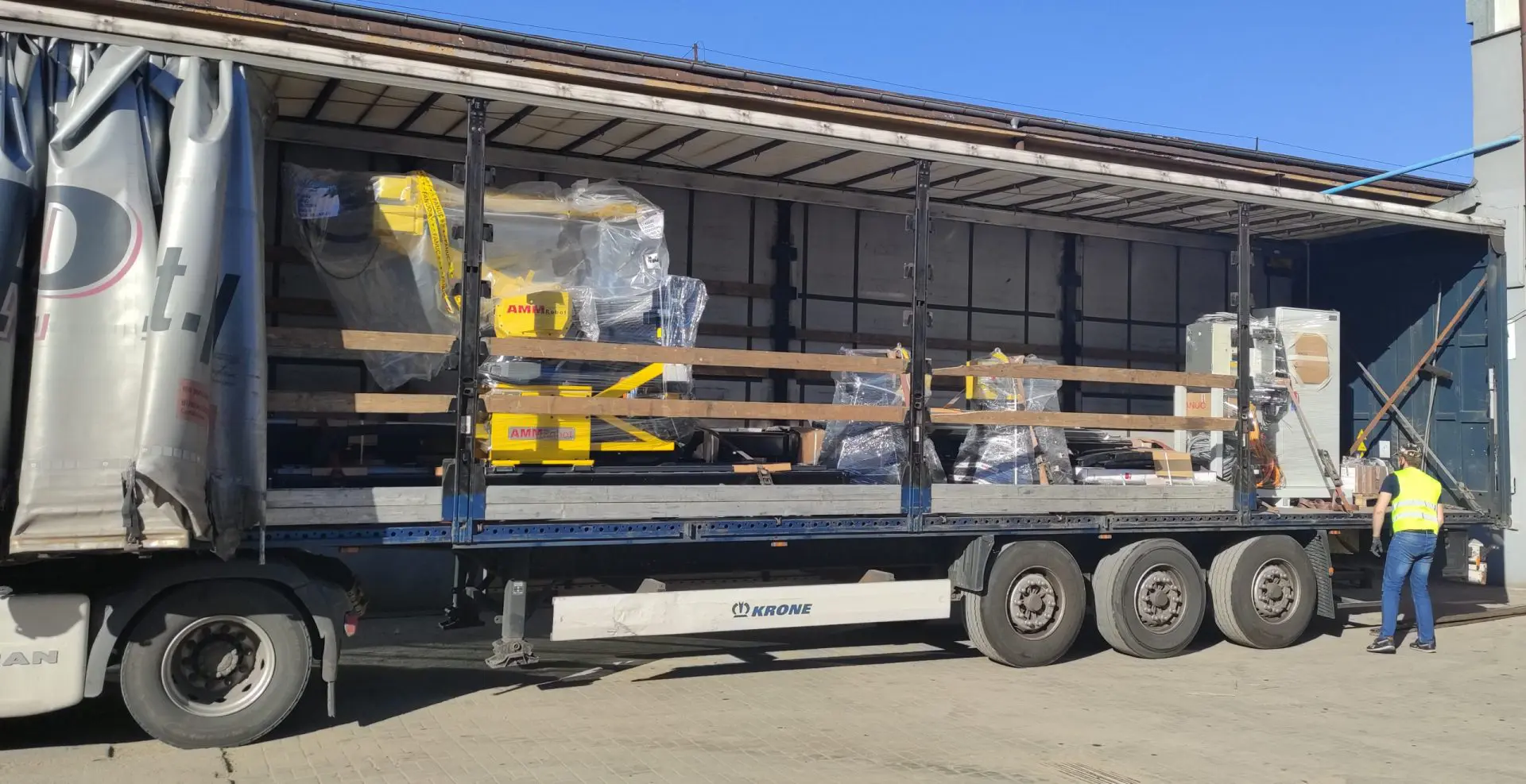
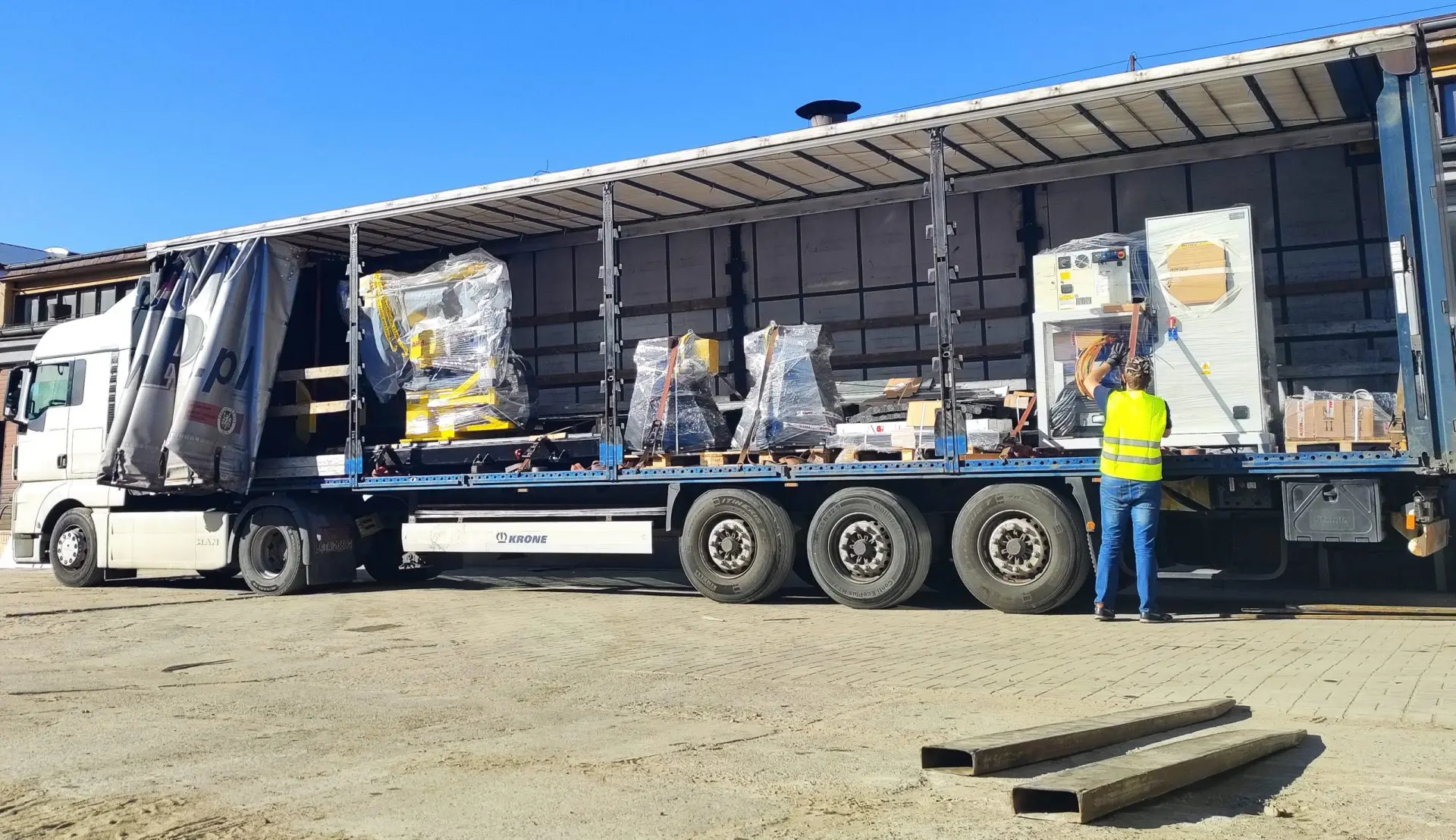
One of the first projects carried out in the hall involved the complete testing of two modern cranes manufactured for a Norwegian customer and designed for servicing drilling platforms.
The cranes feature a unique design. They are equipped with a travelling trolley running on steel wheels, allowing the units to move directly along the ship’s side. A hydraulic drive provides smooth movement and high reliability in demanding marine conditions.
The cranes have two independent working arms, which significantly increases their functionality.
One arm is equipped with an advanced gripping system for ropes and chains. It is used for precise installation operations, such as the installation of buoys and anchors.
The second arm is designed for lifting loads. It has a working radius of up to 15 metres and a lifting capacity of up to 3 tonnes at maximum outreach.
The entire system is remotely controlled. This improves operator safety and working comfort.
One of the key design features of the H9 hall is the retractable roof with a 9 × 24 metre opening. This solution significantly expands the possibilities for assembling and testing advanced crane systems.
Thanks to the retractable roof, cranes exceeding the standard height of the hall can be assembled and tested without moving them outside.
In practice, this means that equipment with an outreach of more than 18 metres can be fully assembled, equipped and tested inside the hall, regardless of the season or weather conditions.
Moving the testing process from a traditional outdoor test area into the hall provides several important operational benefits:
- Independence from weather conditions – rain, wind, frost and high temperatures do not affect the work schedule.
- Controlled assembly environment – stable temperature and no exposure to dust, mud or moisture.
- Higher precision during assembly and testing – hydraulic, pneumatic, electrical and electronic systems can be installed under stable conditions.
- Shorter project lead time – delays caused by weather conditions are eliminated.
- Improved work safety – assembly and testing are carried out indoors, without exposure to rain, snow or strong wind.
The H9 hall is equipped with three independent test stations, providing another major operational advantage.
Main test station
The main station is designed for testing the largest and heaviest cranes. It allows static tests with loads of up to 1,600 tonne-metres.
The station is equipped with a dedicated test rail and advanced load application and support systems. These systems allow operating conditions close to real service conditions to be reproduced.
Two additional test stations
Each additional station allows testing of crane units with loads of up to 480 tonne-metres.
They can operate simultaneously with the main station. This makes it possible to test several projects at the same time.
This configuration allows up to three different units to be tested simultaneously. It significantly increases the production throughput of the facility and provides greater flexibility in project scheduling.
All test stations are located indoors. This means that even advanced tests involving complete operating cycles, dynamic loads, hydraulic power systems, electrical systems and electronic controls can be carried out throughout the year.
The testing process is not interrupted by adverse weather conditions.
The hall is equipped with a range of specialist systems supporting the testing of complex crane systems:
- Test rail – allows mobile cranes to be tested under conditions close to actual operation, for example by simulating operation on a vessel deck.
- Utility supply systems – hydraulic, pneumatic and electrical connections, as well as power supply for electronic systems and automation.
- Control and monitoring system – enables real-time recording of operating parameters. This functionality will be available soon.
- Clean assembly environment – a controlled area with reduced dust and contamination. This is important when installing precision systems, advanced sensors and electronic components.
The tests carried out on the two cranes for the Norwegian customer covered a comprehensive range of checks, including:
- Static tests – verification of structural strength under maximum load and overload conditions.
- Dynamic tests – operation of the arms through their full range of movement, lifting and lowering of loads, and testing of the hydraulic system.
- Control system tests.
- Drive system functional tests.
- Advanced gripper system tests.
- Remote control system tests.
The results confirmed the high manufacturing quality of the cranes and their full readiness for operation in demanding offshore environments.
The retractable roof also made it possible to perform full load lifting tests at maximum height. There was no need to move the crane outside and then reinstall it inside the hall.
This significantly reduced the project lead time and improved working conditions for the assembly and testing teams.
The commissioning of the Clean Assembly Hall is an important step in the development of Expom’s production and testing capabilities.
The facility not only increases production throughput. More importantly, it allows Expom to execute highly demanding projects for customers around the world, particularly in the offshore, marine and heavy industry sectors.
Thanks to:
- the retractable roof,
- three independent test stations,
- a controlled assembly environment,
- advanced technical infrastructure,
Expom has expanded its range of integrated manufacturing services.
These services cover the complete production process – from welding and painting, through mechanical equipment assembly and installation of hydraulic, pneumatic, electrical and electronic systems, to complete final testing.
The testing of the cranes for our Norwegian customer is a good example of how modern production and testing infrastructure supports innovative solutions in the marine and offshore industries.